
The Impact of Technology in Schools on Education
Introduction to Topic
Technology surrounds us everyday. In the classroom it is used to promote learning and is part of the teaching process rather than an add-on for any subject. It involves technological devices, as well as research, and integration theories. Its purpose as a whole is to enhance student learning (Okojie, Olinzock, Okojie-Boulder, 2006). In Ontario 99% of students at the elementary and secondary level have access to computers in their classroom (Chen, Gallagher-Mackay, Kidder, 2014), this shows how prevalent technology is in our society.
An essential act in Ontario is The Education Act on Special Education & Accessibilities for Ontarians with Disabilities Act (AODA) which requires a barrier free environment for students with disabilities. By using technology school districts in Ontario are able to easier fulfill the requirements of AODA.
Benefits of Technology in School
Technology provides students with the ability to control their own process of learning. It provides them with information that before, was only accessible through teachers. Now, a new relationship can exist between teachers and students. Teachers are the facilitators for helping students understand (Davison 2005).
See "Additional Information - Benefits of Technology" for more details.

Flipped Classrooms
One method K-12 teachers use to implement technology centrally in the classroom is called the “flipped classroom” (Morgan, 2014). This change in instruction was meant to provide a new perspective in teaching where the instructor becomes a “learning promoter,” rather than just a “knowledge provider” (Hwang, Lai, & Wang, 2015), where it provides the lectures online (Morgan, 2014). Using a “flipped classroom” students who may require additional time may pause, rewind, and play the lesson as many times as they require to understand, whereas others may skip portions as appropriate based on understanding. These “flipped classrooms” are being offered frequently in post-secondary settings, thus, exposing children in K-12 to this concept early on will prepare them for the future.

Foreign Language Learning
There are numerous benefits to the adoption of technology in the classroom especially in regards to foreign language learning. Technology can be integrated within a new pedagogy. The benefits include; having the means of “computer-assisted language learning (CALL), computer-mediated communication (CMC), distance learning, social networking, and language games” (Blake 2013, xi). Furthermore, it will create connection with an already technology integrated student-body. The teacher has their own responsibility of teaching/using it properly.

Lifelong Learning
Technology allows students to further their knowledge by creating learning opportunities. The school system helps prepare students for further education as well as lifelong learning. Technology can play an essential role in this preparation. In 2002, 86 percent of businesses used computers, and in the government sector, 90 percent of employees had access to computers (Statistics Canada, 2004).
“The education future will belong to those who can grasp the significance of instructional technology” (Finn, 1964).

Individualized Learning
Technology can help increase a teacher’s opportunity to take into account the individualized learning strategies of students (Millar, 2013). This is essential as no one learns the same way, or at the same pace. In today’s society, technology plays a vital role in the lives of our students, and some students are exposed to the use of technology at an earlier age than others. Thus, teachers must also consider the different levels of expertise each of their students bring to the classroom (Bergen, 1999). It is important to find a balance between providing students with the beginner computer skills they need, while encouraging more experienced students to broaden their skillset.

Learning Disabilities
Using Assistive Technology plays a significant role in helping students work towards the goals outlined within their IEP’s (Watson, Ito, Smith, & Anderson, 2010). “Assistive Technology helps in two ways: it can help the student learn how to complete the task and it can help to bypass an area of difficulty” (Young, 2014). “Assistive technology is widely regarded as holding potential for enhancing access, inclusion, productivity, and the quality of life of individuals with disabilities” (Derer, Polsgrove, & Rieth, 1996). “Assistive technology that helps students with learning disabilities includes computer programs and tablet applications that provide text-to-speech (e.g., Kurzweil 3000), speech-to-text (e.g., Dragon Naturally Speaking), word prediction capabilities (e.g., WordQ), and graphic organizers (e.g., Inspiration)” (Young, 2014). It is through these types of technologies that students with learning disabilities are able to focus, become productive, and enhance the quality of life while at school.
Organizational Tool
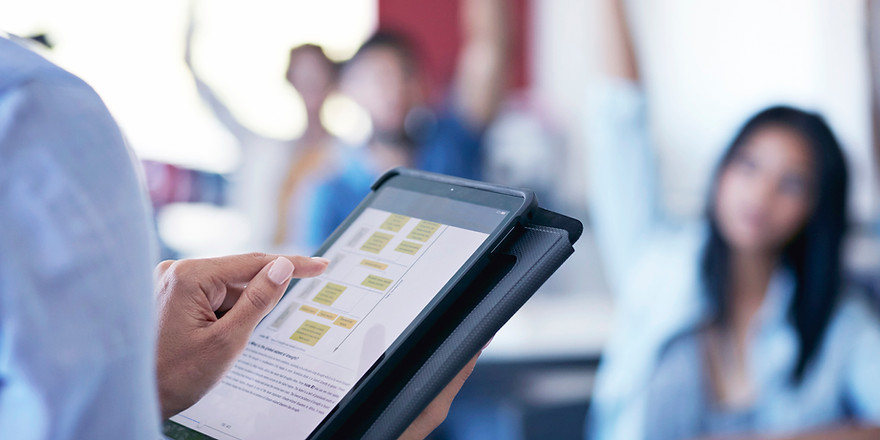
As students can benefit from using technology to learn, the same can be said for helping teachers to teach. Teachers today are able to use special software that allows them to maintain student information, provide parents with important class schedules, and complete marking and grading all in the same program (Starr, 2012). Through these programs of organizational technology, teachers can also have better and easier access to student learning from their past classes (Starr, 2012). With support from teachers who have more experience with technology, the school community can become a connected place where students learn efficiently with technology. Finally, technology can be used to, “…facilitate communication between instructors and learners, making it easier for teachers to provide feedback in a timely and less labor-intensive manner” (Paek, S., & Fulton, L., p. 141, 2016).
Disadvantages of Technology in School
Technology in schools can have a questionable impact such as an observed lower student performance (Wood et al., 2012), require significant time (Becker, 1994; Snyder et al., 1992,, as cited in Gundy, 2012), and can be costly (Chen, Gallagher-Mackay & Kidder, 2014). Whether or not the cons are outweighed by the pros of technology in classrooms needs to be critically examined.
See "Additional Information - Disadvantages of Technology" for more details.
Technology as a Distraction
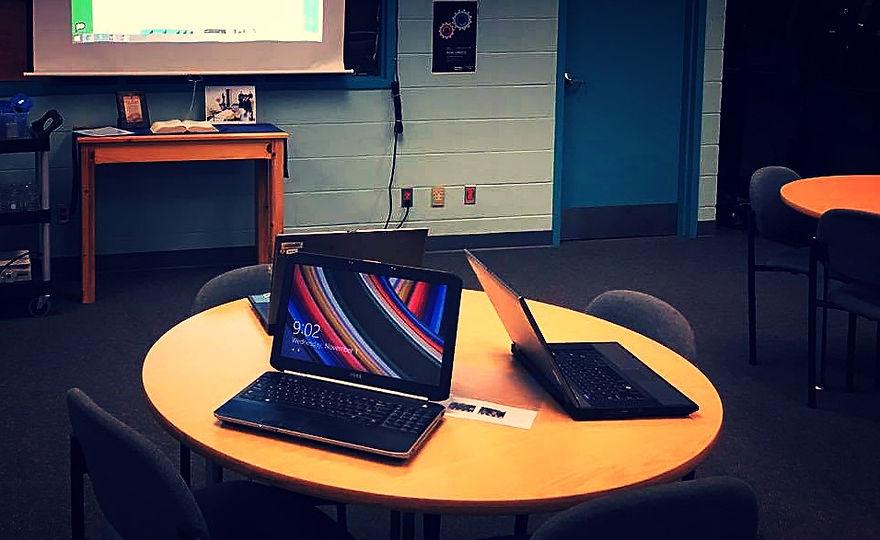
Participants who did not use any technology outperformed students who used technology because the users of technology were likely to be off-task (Wood et al., 2012). When using laptops in particular, people can become distracted because of involuntary factors causing a shift in focus (Chun & Wolfe, 2001 as cited in Fried, 2008). The factors may be due to the “orientation and visual nature of laptops, along with pop-ups, instant messages, movement and lighting of text, and even things like low-battery warnings” (Bhave, 2002; Melerdiercks, 2005; Wickens & Hollands, 2002 as cited in Fried, 2008, p. 908). Additionally, students may use the laptops inappropriately which is distracting to themselves (Wood et al., 2012) and other students (Fried, 2008).
Lack of Technological Knowledge & Support
Some teachers refuse to integrate technology because they feel like they do not have the appropriate skills (Hew & Brush, 2007). Some teachers feel like they will not have support from experts available (Gundy, 2012), nor the support of other teachers (Gundy, 2012). It is essential for teachers to have necessary resources and technology-integrated lesson plans available to them for successful integration (Hew & Brush, 2007).

Time & Instructional Challenges
With the integration of technology into teaching, a teacher must put in a significant amount of work (Becker, 1994; Snyder et al., 1992, as cited in Gundy, 2012). Additionally, the teacher must adapt their teaching strategies for the effective use of technology (Gundy, 2012).

Equal Access to Technology
It is important to teachers that students have equal access to technology inside and outside of the classroom (Gundy, 2012). Some people feel that by having students bring their own device to school can help with the equal access issue, but it creates new challenges for teachers such as: monitoring student activity (Hower & Whitford, 2015) and having to help students with individual devices (Hower & Whitford, 2015). When a student has to complete work using technology at home, students in a low-income family or living in remote areas are discriminated against because they are less likely to have access to technology (Chen, Gallagher-Mackay & Kidder, 2014).

Cost and Unreliability
Although 99 percent of elementary and secondary classes have access to computers and other high-tech equipment (Chen, Gallagher-Mackay & Kidder, 2014), it is important to note that these various forms of technology do come at a cost. Expenses include installation, repairs, as well as upkeep and maintenance fees, which can ultimately exceed the school’s budget (Chen, Gallagher-Mackay & Kidder, 2014). Lastly, technology can be unpredictable and unreliable, which can result in lost time in the classroom (Gundy, 2012).

This is Your Media Gallery Subtitle
This is Your Media Gallery Title


